
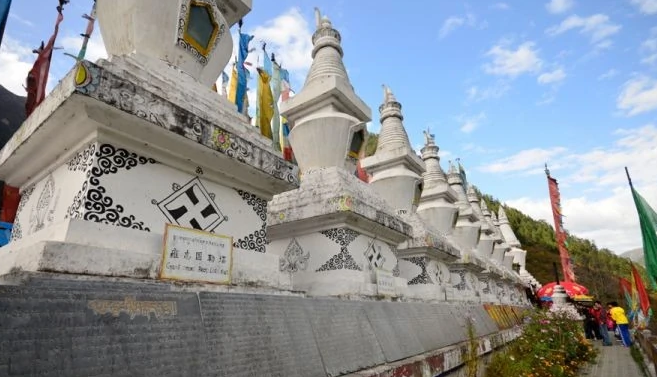
In Tibetan Buddhism, pagodas are categorized into two types: lingta and buta. Lingta are enshrined in monasteries, made of gold or copper, representing a form of burial for living Buddhas. Buta, on the other hand, are constructed in less populated areas of monasteries and villages. The original color of the pagoda must be white. The naming of a pagoda is determined by the type of scriptures and ritual objects inside, the shape of the pagoda body, and its decorative features.
If it is a group of pagodas, the naming is combined based on the content and name of the main Buddha pagoda’s scriptures, such as the ‘Nine Treasures Lotus Bodhi Pagoda’ in Shuizheng Village of Jiuzhaigou. The height of the pagoda must not exceed the height of the main buildings in the monastery and villages. A pagoda consists of seven parts: the base, the foundation, the waist, the vase seat, the vase, the finial, and the top. The foundation and vase seat must be stepped, while the finial must be thirteen-stepped, and the top represents the sun, moon, and stars. Bon religion is a form of animism, worshiping all things in the world such as heaven, earth, sun, moon, stars, mountains, trees, stones, clouds, birds, and beasts, and the pagoda is a miniature reflection of this reverence for all things. The five steps of the vase and vase seat, from top to bottom, symbolize the blue sky, white clouds, rocky mountains, forests, and earth. The vase seat also has various shapes and patterns based on different intentions, which determine the name of the pagoda. Inside the pagoda are items from the human world, such as utensils for daily life and production made of gold, silver, copper, and iron, various clothing, jewelry, weapons, earth and wood, various scriptures, protector deities, and Buddha images. The top of the pagoda, divided into sun, moon, and stars, is a symbol of Bon religion. The direction of the prayer wheel’s rotation is the same as the rotation of the universe and stars, symbolizing brightness, the radiance of the sun, eternity, solidity, and the endless cycle of samsara, which is also the philosophical theory of Bon religion. The Nine Treasures Lotus Bodhi Pagoda represents the unity of nine Tibetan villages, praying to the heavens for peace and happiness. Each pagoda represents one of the nine villages in Jiuzhaigou, symbolizing that Shuizheng Village was once the center of politics, economy, and religion in Jiuzhaigou. During festivals, Tibetans gather here to recite scriptures and pray for auspicious health and favorable weather. Surrounding the pagodas are various colored flags called prayer flags, which are filled with various scriptures. As the wind blows, the flags flutter, reciting prayers repeatedly. The prayer flags usually come in five colors, each with a different meaning. Red represents the fiery sun, yellow represents the yellow earth, green represents all living beings, white represents the moon, and blue represents the ocean. Due to slight differences in local religions, the interpretation of the colors of the prayer flags also varies slightly. These nine white pagodas are surrounded by dozens of prayer wheels of various sizes, with the largest one in the pagoda representing Shuizheng Village. These nine white Bodhi pagodas stand majestically at the entrance of the village, showing people that they have arrived at a sacred and holy land.Opening hours: Open 24/7 throughout the year. The specific business status is subject to the opening conditions on the day.

